
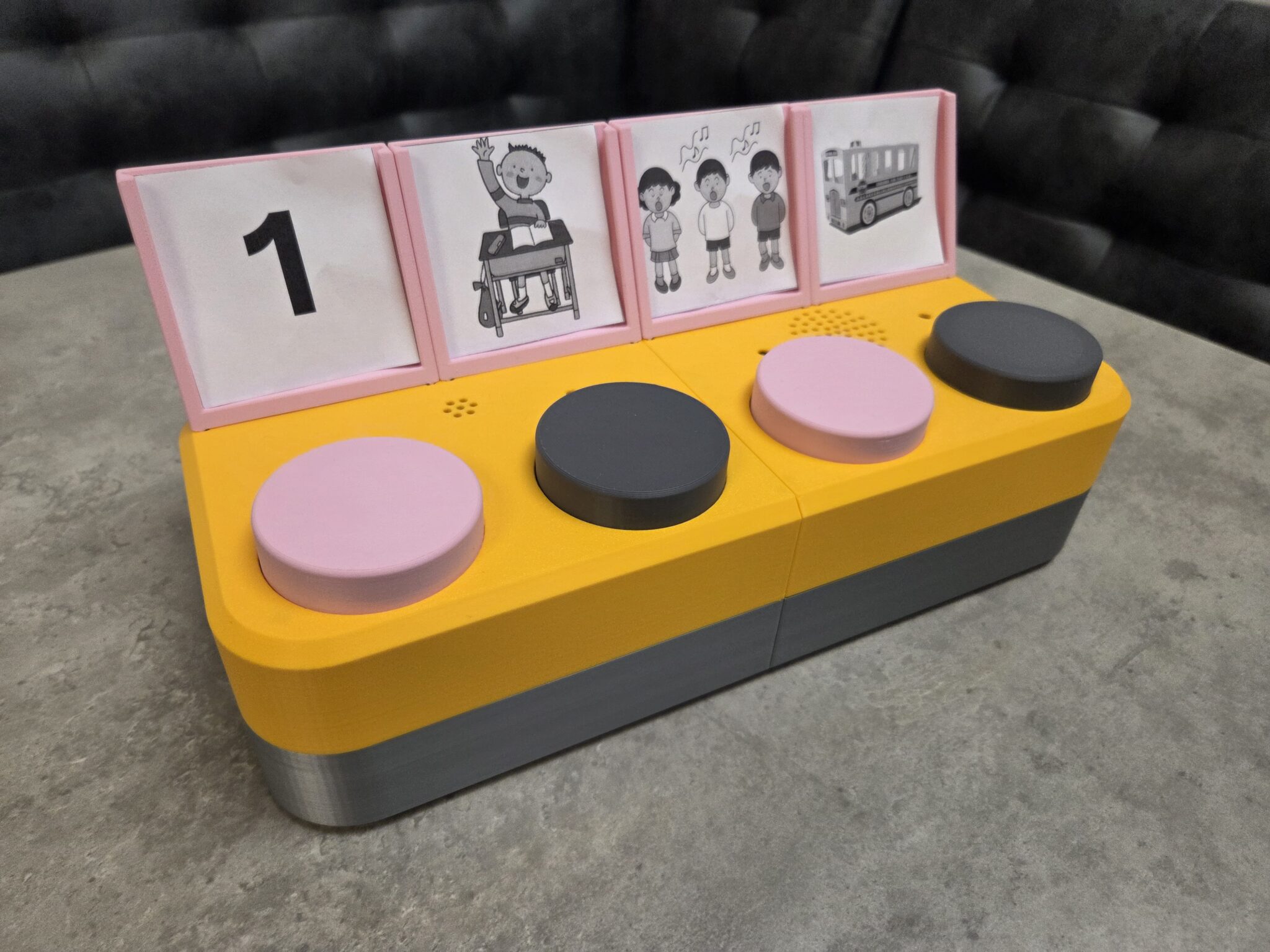
One of our newest additions to the Makers Making Change (new window) device library is the Chatterbox (new window), an auditory switch-scanning augmented and alternative communication (AAC) device.
Designed by mechanical engineering designer Stephan Dobri from a request by the Surrey School District, the Chatterbox is designed for youth with complex communication needs who also have low vision. The Chatterbox firmware and hardware is based on the Open Playback Recorder (new window).
While many AAC devices rely more on visual cues, the Chatterbox is designed so that users can rely more on audio feedback. Users can play pre-recorded messages using single or dual switch scanning — as they scan through the messages, the user can determine if that’s the one they want to play or if they want to skip to the next one.
Four different messages can be recorded on each level — there are three different levels that can be toggled, for a maximum of 12 recorded messages. Users can also toggle between three speeds for the switch scanning, changing the length of time the device waits after previewing a message before starting the next.
While it’s designed to emphasize audio feedback, the visual component is still an important part of the design — a lot of the feedback we received during the design process had to do with the shape and size of the device for users who had some vision. There are four slots for printed image cards to go with the pre-recorded audio messages, and an LED that lights when each switch is activated.
With the total cost of materials coming in at around $135 CAD, the Chatterbox was designed as an affordable option for clinicians to trial switch-scanning devices with kids to see if it’s a fit with their communication needs. Commercial versions — which often require many different components, including an iPad, custom software, and the switches — can cost hundreds of dollars, so the Chatterbox provides an opportunity to trial switch-scanning before committing to more expensive assistive technology.
This post originally appeared on the Makers Making Change (new window) website.