
Clubs That Care
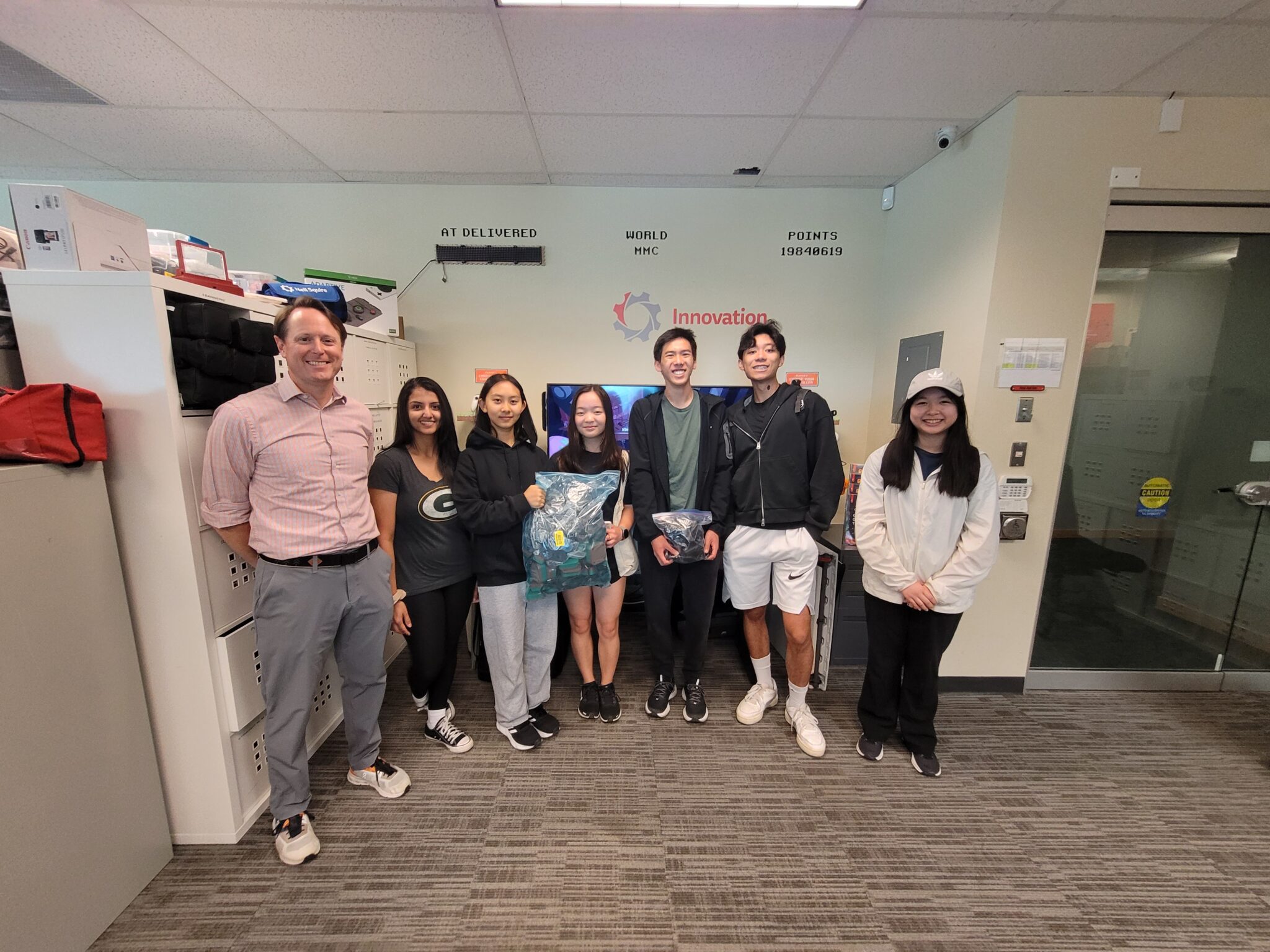
We re-launched our Clubs That Care (new window) initiative to empower youth leaders to make a difference in their communities. With funding from the Government of Canada, we can provide $3,000 micro-grants to youth between the ages of 15 and 30 in order to engage volunteers in building and delivering assistive technology to Canadians with disabilities.
In 2025, we issued grants to 148 youth leaders, who engaged 1,456 volunteers from across the country to deliver 1,592 devices to people with disabilities.
It’s a great opportunity for youth to develop skills and gain experience all while making a real-world difference. As a Clubs That Care leader, high school student Jaxon hosted his first build event, taking care of everything from promoting the event at his school to ensuring his volunteers had everything they needed to make devices.
“I really enjoyed it. It was interesting running it, because there’s so many different things you can learn,” he shares. “I haven’t had the opportunity to do something with a lot of those moving parts before, like there’s so much planning that goes into this sort of thing. I think it’s really helpful for developing budgeting skills and collaboration skills.”
Hamza, a Kinesiology student at the University of Saskatchewan, had his club build 30 adapted bubble blowers at their first event, donating them to the Alvin Buckwold Child Development Program.
“I’d like to work somewhere in healthcare where I can continue to make a difference in people’s lives. My experience with Clubs That Care has been very helpful in regards to that. I’ve made a lot of great connections and got to speak to a few healthcare professionals when I dropped the toys off. I got to really develop my leadership and planning skills working on this, and that’ll be helpful for any career I get into,” Hamza says.
STEM With Purpose
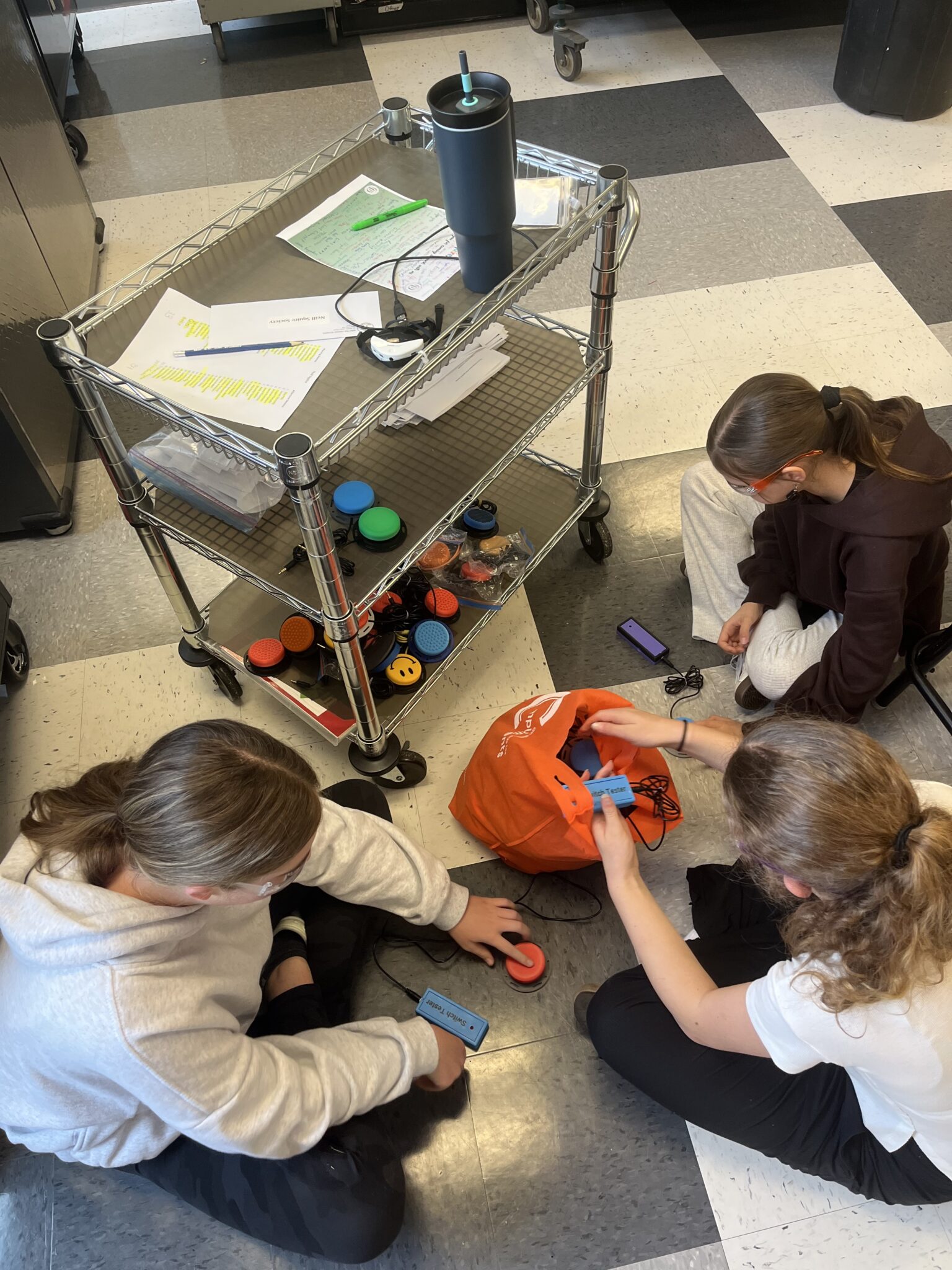
An important focus at Makers Making Change is engaging youth in STEM education while also giving back to their communities. Through our STEM With Purpose workshops, we teach students hands-on STEM skills like soldering, and have students make a real-world difference through activities like building assistive technology for Canadians with disabilities.
In 2025, 8,721 youth from K-12 participated in our workshops, and we worked with 102 schools across Canada.
“It was really authentic learning because it was an engineer that came and spent time with them. They were learning skills and then they could see something tangible being built. Not only learning maker skills, but learning how to give back,” says Angela McQuaid Murphy, who teaches grade 7 and 8 French Immersion math and science at Gretna Green, where 67 students built switches for our Hacking for the Holidays campaign.
Attendance at events like the Skills Canada National Competition — where we taught over 340 students how to solder and build battery interrupters — allowed us to reach even more youth.
We’ve also seen the impact on youth volunteers and build event participants who have shared that their participation influenced them into studying STEM-related fields.
“I wasn’t fully set on engineering before I volunteered, but now I 100% am,” shares Hanna, a high school volunteer.
Didi, who had recently finished an engineering co-op term with us, explained that participating in a build event with us in the past had first set her down the path to studying biomedical engineering. “I’ve always really liked to do things with my hands, like I’ve always been a very crafty person, and up until that point I didn’t really know how to apply that,” she says. “I don’t think I would have ended up going into engineering if it wasn’t for an event like that.”
Adaptive Gaming

We have continued to be a leader in the field of adaptive gaming, working with gamers, clinical centres, and game developers to ensure that gaming is accessible to everyone.
Our network of 11 GAME Checkpoints (new window) — which include GF Strong Rehabilitation Centre (Vancouver), Glenrose Rehabilitation Hospital (Edmonton), Foothills Medical Centre (Calgary), Alvin Buckwold Child Development Program (Saskatoon), West Park Healthcare Centre (Toronto), Centre de réadaptation Lucie-Bruneau (Montreal), Stan Cassidy Centre for Rehabilitation (Fredericton), and the Nova Scotia Rehabilitation and Arthritis Centre (Halifax), as well as our Burnaby and Calgary offices — have served 187 gamers with disabilities in 2025.
That includes gamers like Adam (new window), a young boy with cerebral palsy who loves racing games. While he’s always liked gaming, he couldn’t play independently as he couldn’t hold the controller by himself and press the buttons. Thanks to his new adaptive gaming set-up, now he can play independently, and more importantly, with others.
“With this, he’s independent,” shares Anne, Adam’s mother. “It is something that him and his brother can play together. So, they can race against each other, and Adam actually always seems to win now. And then he also can invite his friends over, and they’re able to play games together as well.”
We were proud to support the Cerebral Palsy Association of BC (CPABC)’s Gamers Club initiative, ensuring that 20 British Columbians with cerebral palsy received fully customized adaptive gaming set-ups. We provided assessments for each participant, and Clubs That Care volunteers built and donated joysticks and custom toppers.
“Our collaboration with Makers Making Change has been nothing short of incredible,” says CPABC Director of Operations, Denzil Hunt. “This partnership continues to break down barriers and open doors to inclusion, independence, and meaningful social connection for people with cerebral palsy.”
In June, our Accessible Gaming Lead Tyler Fentie was invited to speak at the International Symposium on Assistive Technology in Seoul, South Korea, where he had the opportunity to share knowledge with and learn from assistive technology organizations in South Korea.
In September, we officially launched our GAME Kits (new window), an exciting new initiative to expand accessible gaming across Canada. Available to order by individuals and organizations in Canada, the GAME Kit includes everything you need for an accessible gaming showcase, including a well-rounded set of adaptive gaming gear and an easy-to-use guide. All proceeds from the GAME Kits support our adaptive gaming programming for Canadians with disabilities.
Research and Development

Our Research and Development team were hard at work on a number of projects in 2025.
Several new devices were added to the Assistive Device Library (new window), including the Willow Joystick (new window) and the Redwood Joystick (new window). We also made numerous updates and improvements to devices in the library, including significant updates to the Interact Switch (new window), one of the most frequently requested assistive switches, as well as our Switch Adapted Toys, which included updating and consolidating resources and instruction into a single repository (new window). These improvements should make it easier to for the community to switch adapt new toys, document the process, and share it.
Early in the year, we released a major firmware update for the LipSync, making the device both easier to use for the people who need it, as well as easier to build by volunteer makers.
Our team also worked on a few devices you’ll be seeing in the library soon.
The Chatterbox, a switch scanning communication device meant for users with complex communication needs and visual impairment, has come a long way this past year. The current prototype is out for user-testing with various clinicians and users in BC and Ontario. We’re excited to hear their comments on the device as we get ready to publish it to the website.
The Big Open Switch, on the other hand, is a larger diameter switch suitable for users who have a hard time targeting smaller switches. Currently our team is working on improving its functionality, reliability, and ease of construction for makers and volunteers.
Another big focus for our Research and Development team included developing resources for our community.
Over the years, we’ve collected and developed a set of best practices and dimensions for designing OpenAT and incorporating various standard features and common parts. Over this past year, we made a concerted effort to make these into a publicly available resource, the OpenAT Design Guide (new window). The initial version includes the best way to design the common design features we include in our devices and the best dimensions that we’ve found for working with the most common commercial components we use.
The guide is intended to be a living document that continues to grow and expand with the help of our community. Please have a look through what we’ve added so far, and if there’s something that you feel is missing, check out the “How to Contribute” (new window) section to learn how to add to the guide.
We are also putting the finishing touches on several new resources for our Open AT Joysticks (new window) — a collection of open-source input devices useful for digital access and adapted gaming — including an overview, a joystick selection guide, a combability guide, and a mounting guide. The resources will make it easier for people to choose, setup, and use a suitable joystick.
Hacking for the Holidays
Over the course of our Hacking for the Holidays (new window) campaign, you helped us raise over $142,500, host 256 events engaging 7,062 volunteers, and deliver 4,257 adapted toys and switches to families and clinicians across Canada.
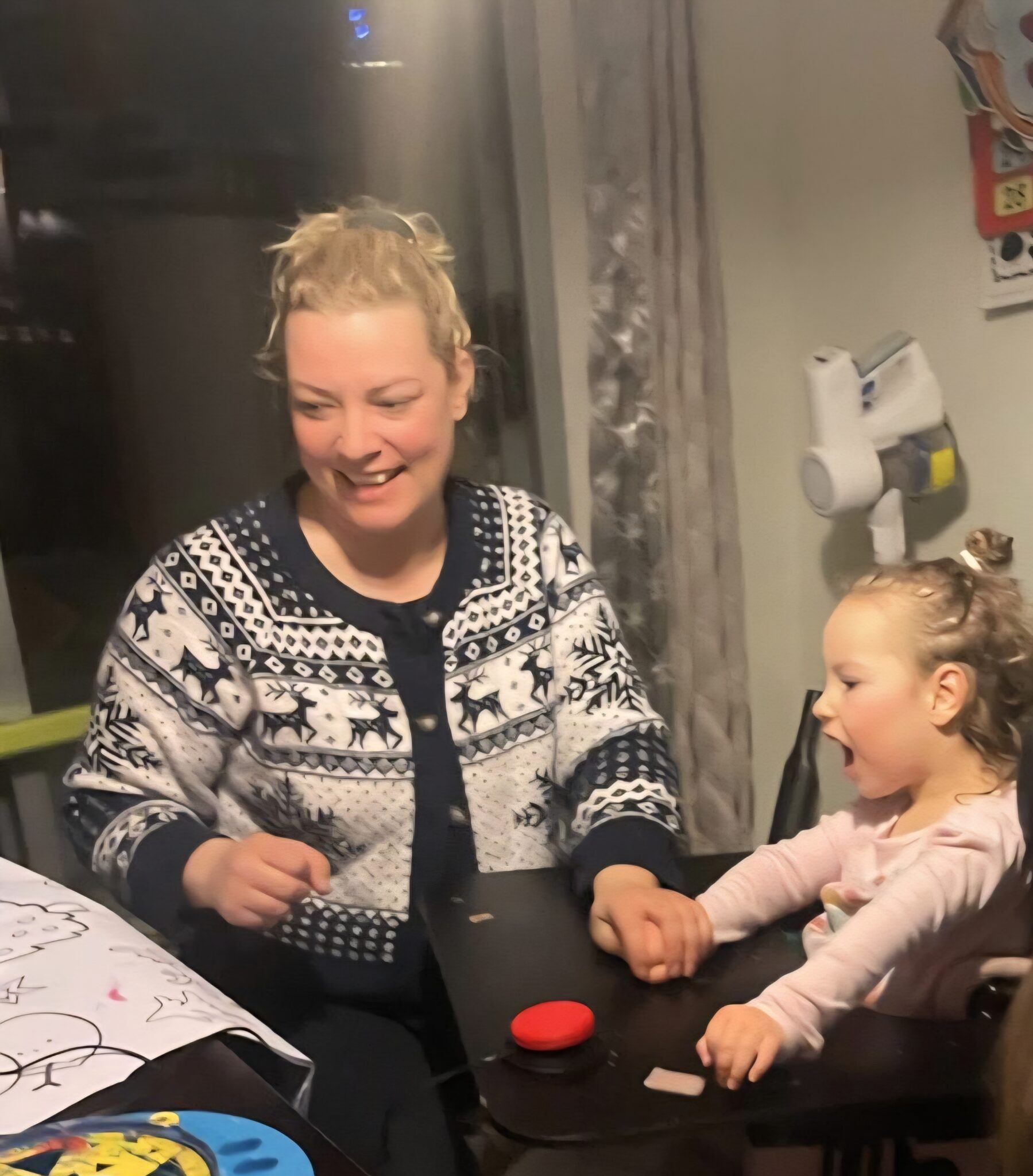
Priscilla, who is five years old, received an adapted paint spinner from our Hacking for the Holidays campaign. The adapted paint spinner allowed Priscilla to press a switch to paint Christmas ornaments for her family.
“We had an amazing time playing with the adapted paint spinner,” shares Priscilla’s mother, Ashley.
“This was such an awesome activity for her. We did it as a family for over an hour. She got to choose all her colours and kept pressing the switch until she was done that ornament. We made ornaments for her to give out to family for Christmas. It is a really special and personal gift. She’s never really been able to do that before.”
Thank You!
Thank you to everyone in our community who helped make 2025 such a great year for Makers Making Change! We can’t wait to see what 2026 has in store.
This post originally appeared on the Makers Making Change(new window) website.