
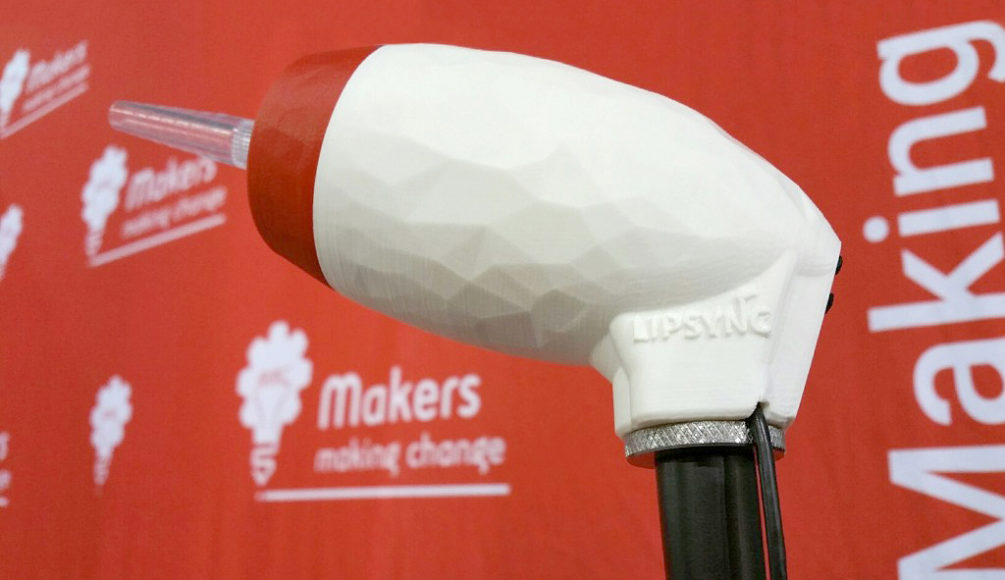
This year, we’re celebrating 10 years of our Makers Making Change (new window) program.
Over the past 10 years, Makers Making Change has hosted over 1,800 build events, engaged 45,000 volunteers, and delivered over 30,000 devices to people with disabilities around the world. Our open-source assistive device library has over 200 designs for assistive technologies that anyone can make and customize, while our platform ensures that people with disabilities who need assistive technology connect with volunteer makers who can build them.
What began with one device became a movement. Here’s a look back at the beginning, with the device that started it all.
The LipSync
Our story begins with the LipSync (new window). On April 12, 2016, the Neil Squire Society received an $800,000 USD grant from Google.org to develop and release an open-source device that would allow people with disabilities that make it difficult to move their arms or hands to use computers and mobile devices through a mouth-controlled joystick.
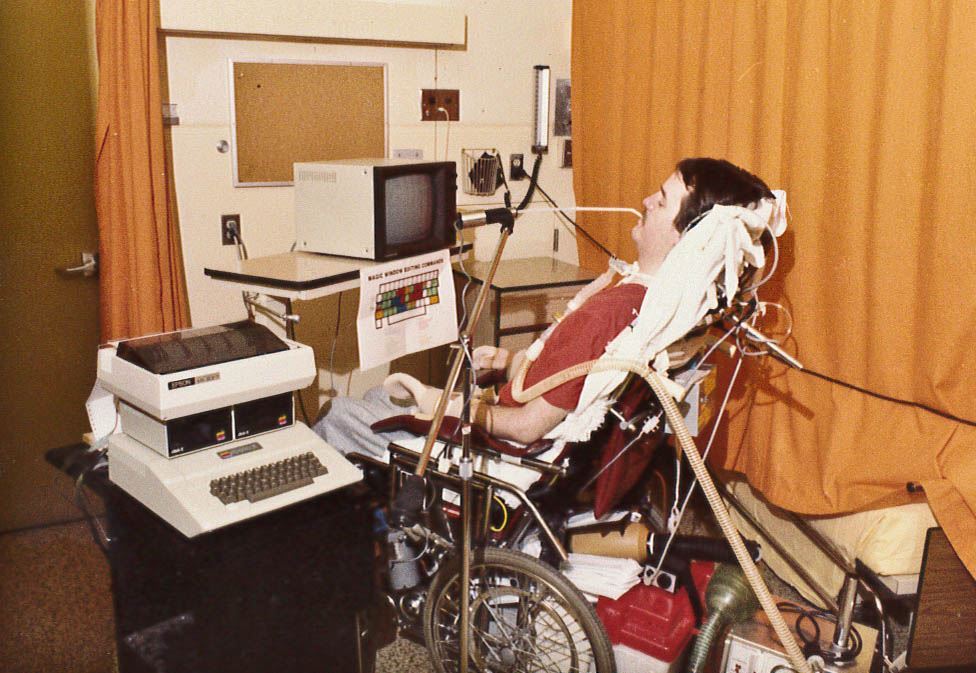
The LipSync wasn’t the first transformative sip-and-puff device in our history. In fact, our Society’s history began in the early 1980’s when our founder Bill Cameron developed a sip-and-puff machine that allowed our namesake Neil Squire, who had recently been in an accident leaving him a quadriplegic, to communicate using morse code. (Neil pictured below using a sip and puff device to use a computer. Neil passed away in 1984, and our Society was founded in his honour).
In 1995, our Research and Development team developed the Jouse, a sip-and-puff alternative to a standard computer mouse, which was licensed by Compusult, who manufactures and distributes it in North America to this day.
The LipSync’s origins came from a similar place. In 2004, over 20 years ago, we began work on an initial LipSync prototype. Originally designed with a CNC metal body and intended for a more traditional commercial method of distribution, the project was shelved by the end of the decade.
However, the innovation of this new LipSync project really came in how it would be distributed. Rather than being manufactured for commercial release — which would likely require it to cost thousands of dollars — the LipSync would be designed so that makers and volunteers could build it on their own, providing it to people with disabilities around the world just for the cost of parts.
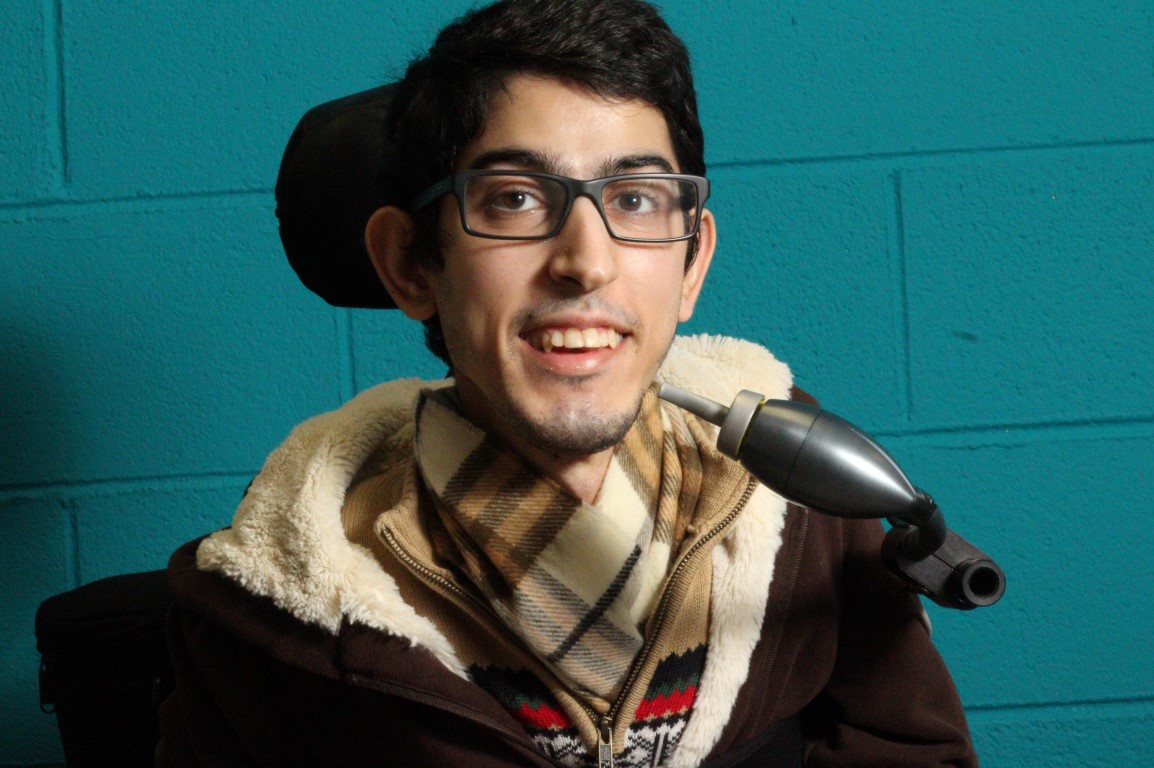
With the Google.org grant, we assembled a team of engineers that summer to develop this new device. This team included Milad Hajihassan, a systems engineer, pictured above with the previous metal prototype. (In addition to playing a big role in the development of the LipSync, he designed many innovative devices in our device library combining his technical knowledge with his own lived experience of disability. Sadly, Milad passed away in 2024).
While there was an initial prototype previously developed from the previous project, everything needed to be designed from scratch so that it could be built by makers using a combination of 3D printing and commercially available components like circuit boards and electronics. As well, since the development of the initial prototype, smartphones had become widely used, so that would need to be considered, with options for Bluetooth connection needed too.
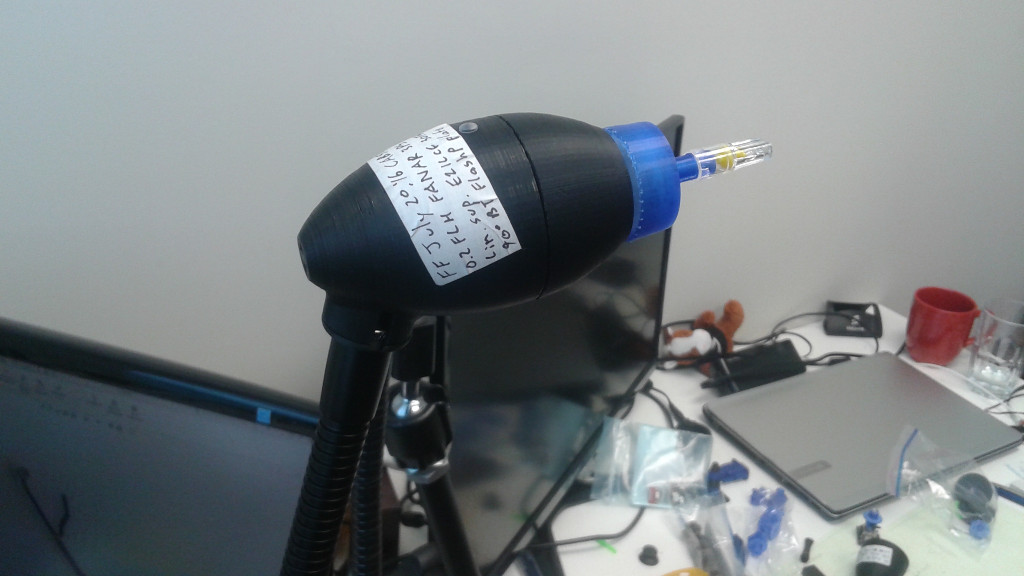
Our team worked to make each part of the process as inexpensive to build as possible, trialing PS2 thumb joysticks — which could be found for $2 at the time — to control the joystick, and even using a cigar tip as part of the early mouthpiece apparatus design. (Both were upgraded from rather early on).
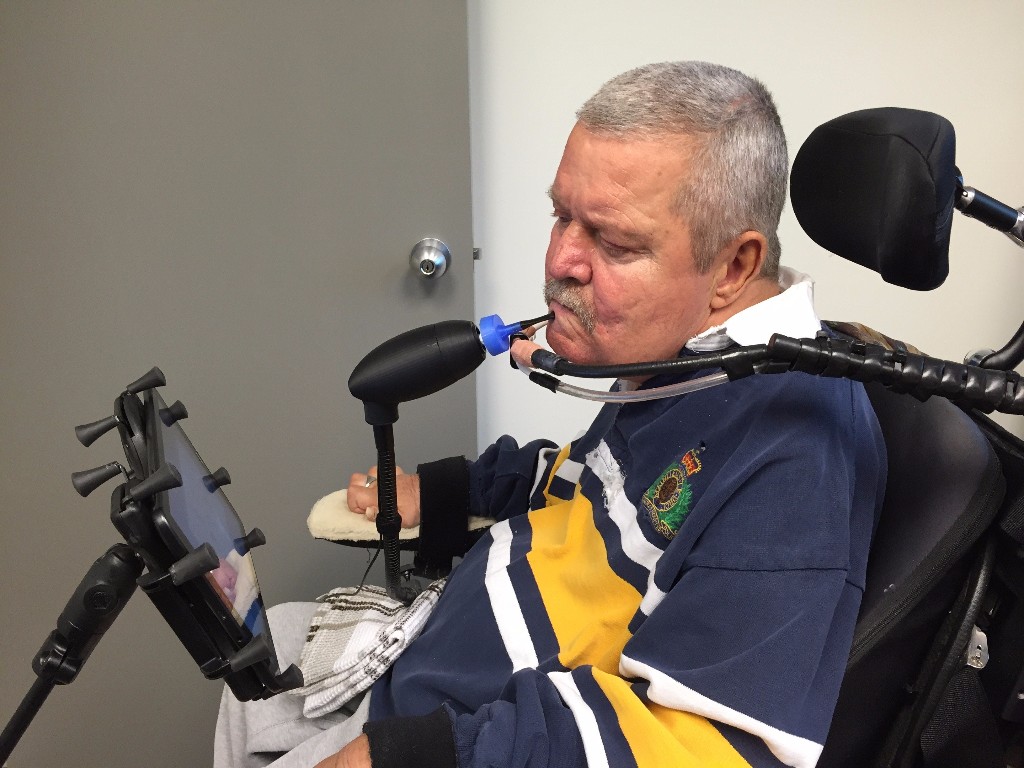
By fall of 2016, the team had an early prototype, complete with a 3D printed casing. While it was still very much a work in progress, user testing began. Don Danbrook — a longtime member of our board of directors, as well as a participant in many Neil Squire programs, who sadly passed away in 2023 — became the first person to take a LipSync home and the first user. (Pictured above with an early LipSync). Feedback from him and other early users steered the development of the LipSync, both from a usability standpoint — joystick sensitivity was an early concern — and for what activities people might use the LipSync for.
While we worked on the LipSync, the team also conducted a lot of outreach across Canada and the US, attending a number of maker fairs and conferences, laying the groundwork for a community of volunteer makers that could build LipSyncs, and what would eventually become the Makers Making Change maker community.
The Beginnings of Makers Making Change: Access Makeathon and Early Build Events
As the team worked on the LipSync, it soon became obvious that this maker volunteer model for assistive technology could be applied on a greater scale. With the goal of developing affordable DIY assistive technology, and creating a community that could build these devices, the team working on the LipSync officially became the Makers Making Change program by the end of 2016.
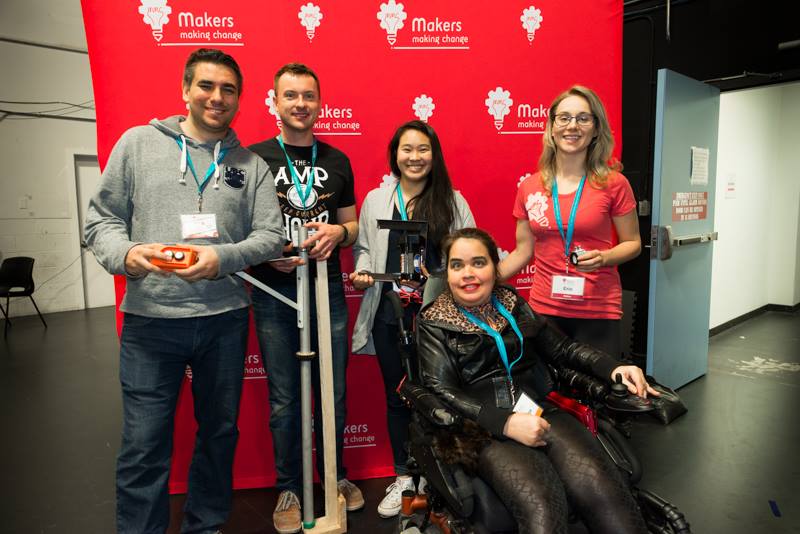
This new Makers Making Change program would first be unveiled to the public at our first event: the Access Makeathon hosted from January 27th to 29th, 2017 in Vancouver, BC. Over the course of 48 hours, 10 teams of makers partnered with a person with a disability — who captained the team — to make a device that addressed a need of theirs.
Some of the ideas involved modifying the LipSync to address a need, while others started completely from scratch. Jim’s team (new window) used the LipSync to create a device that would activate a vibrating alarm that would wake up his wife, Isabelle, when he had an issue. Ashley’s team (new window) built a cupholder for her crutches, while Timothy’s team (new window) built an adaptive controller set-up that he could use to play the Wii. (Perhaps a foreshadowing of our adaptive gaming initiative that launched years later).
The Access Makeathon was a trial run in the mission of connecting people with disabilities to volunteer makers who could build affordable assistive technology.
By this time, we had a working design for the LipSync. Our team had built a number of LipSyncs by this point, but we hadn’t had any outside makers make one yet. On March 13th, we hosted our first ever public build event, building LipSyncs at the BC Tech Summit in Vancouver, BC. (Pictured below).
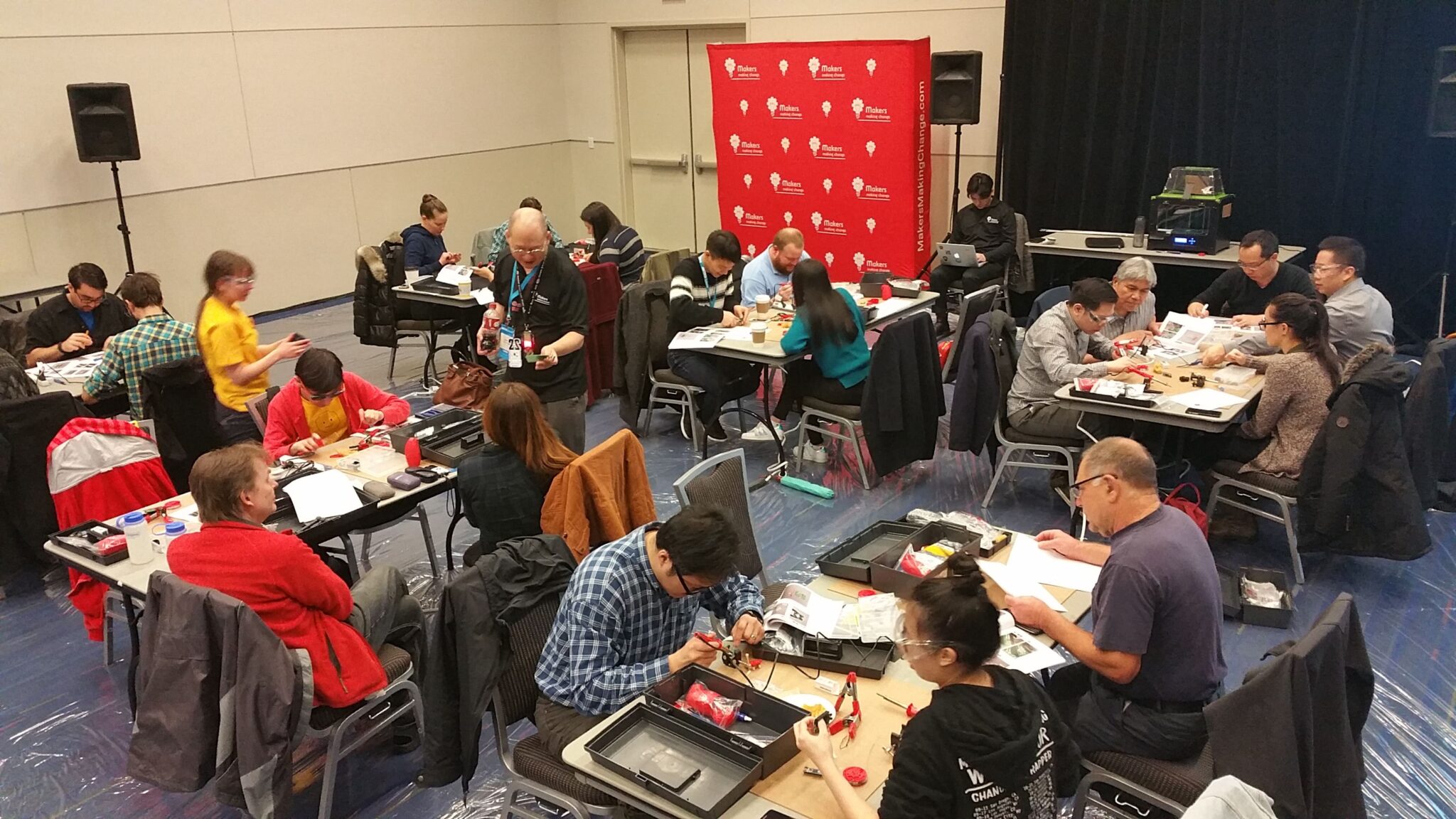
This build event — along with build events held later that spring and summer — served a couple purposes. One, to build LipSyncs that we could deliver to people who needed them. But it was also important to gauge how easily people could build them, and what we could improve on from that perspective — our design didn’t just need to be usable, it also needed to be makeable. We’d take feedback and use it to refine everything from the instructions we made to the design and materials we use.
In that first build event, we learned that the LipSyncs took more time to build than we anticipated, and that the force-sensitive resistors that we landed on using to control the joystick were delicate and hard to put together. (In our latest iteration of the LipSync, published in 2024, we replaced them with a magnetic sensor-based joystick).
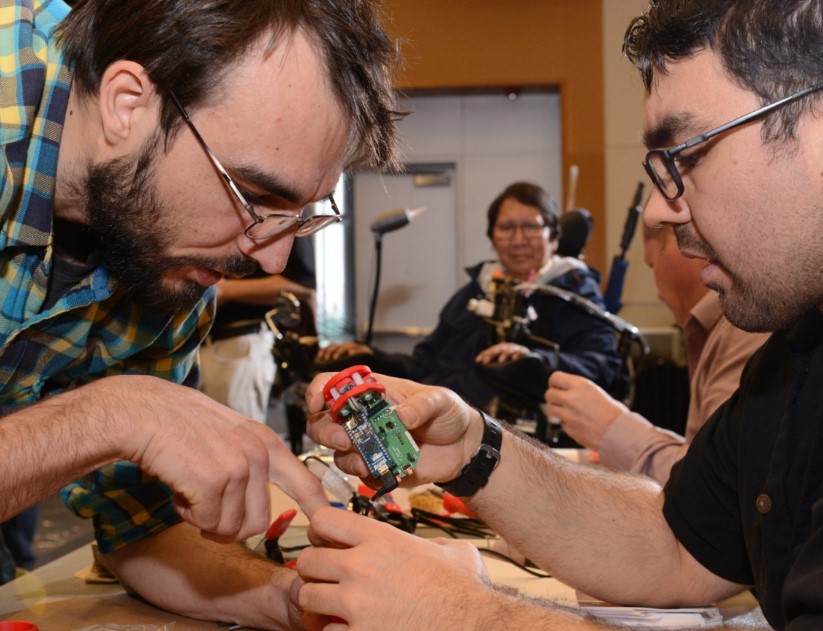
Our current Technical Manager for our Engineering Team, Jake McIvor (pictured on the right in the photo above, holding the LipSync components), first started out as a volunteer at that first LipSync build.
Around that time, we saw a number of firsts. That month, we had our first group of outside makers take on a LipSync build on their own initiative — a pair of co-workers in Philadelphia had learned about it online, and decided to build one as part of an accessibility initiative at work.
In April, we also held our first school build event where students at Burnaby South Secondary built 22 LipSyncs, the first of many such events that would become a staple of our activities.
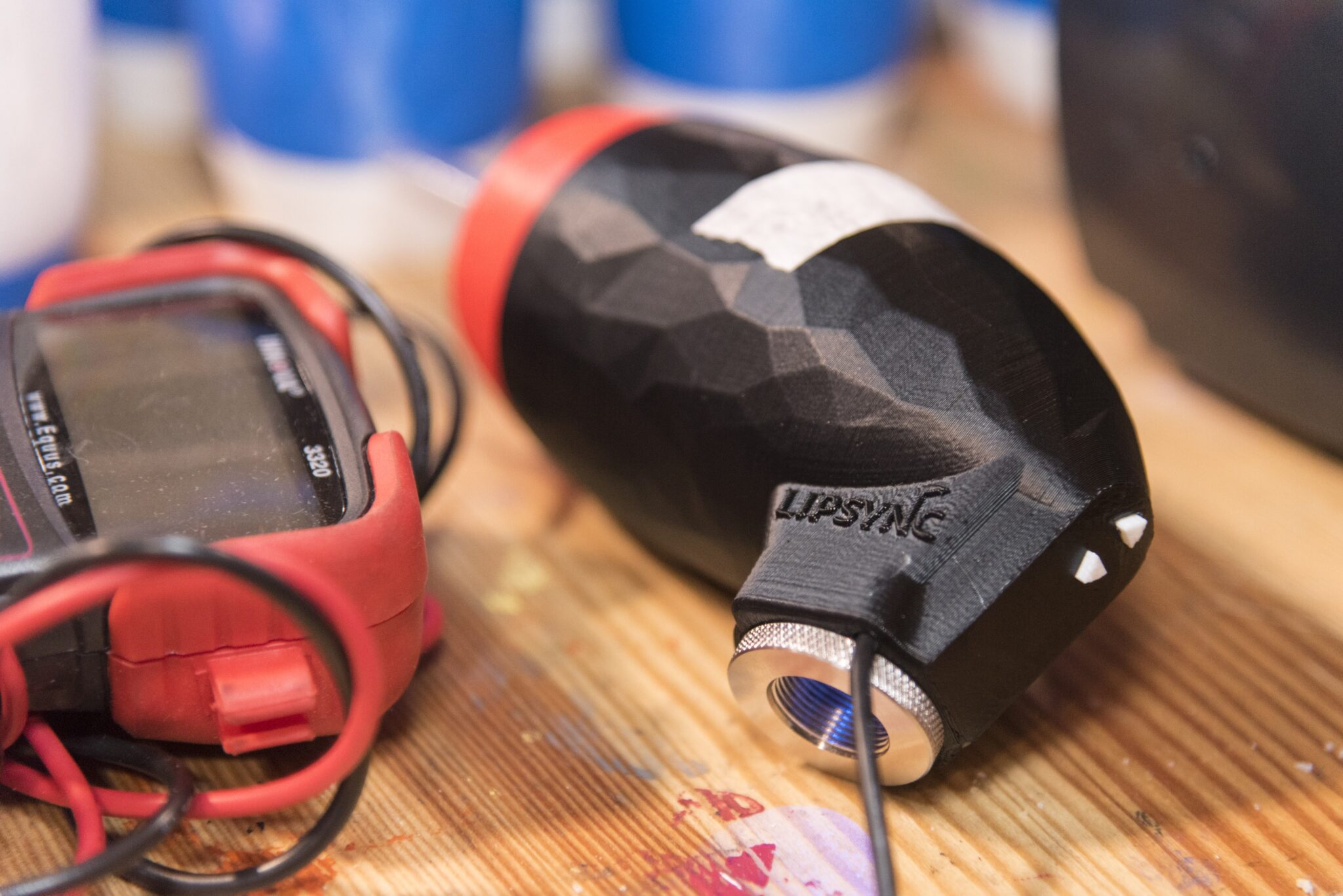
In June, our team’s hard work was recognized with the LipSync earning the Most Disruptive Technology award at the 2017 RESNA Annual Conference.
All through this, our team continued refining the LipSync based on the feedback of both makers and users. By the end of 2017, through 17 build events held across Canada and the US, we had built 320 LipSyncs that would be donated to persons with disabilities.
A New Platform for a Bigger Mission
The mission of our Makers Making Change program was about more than just one device.
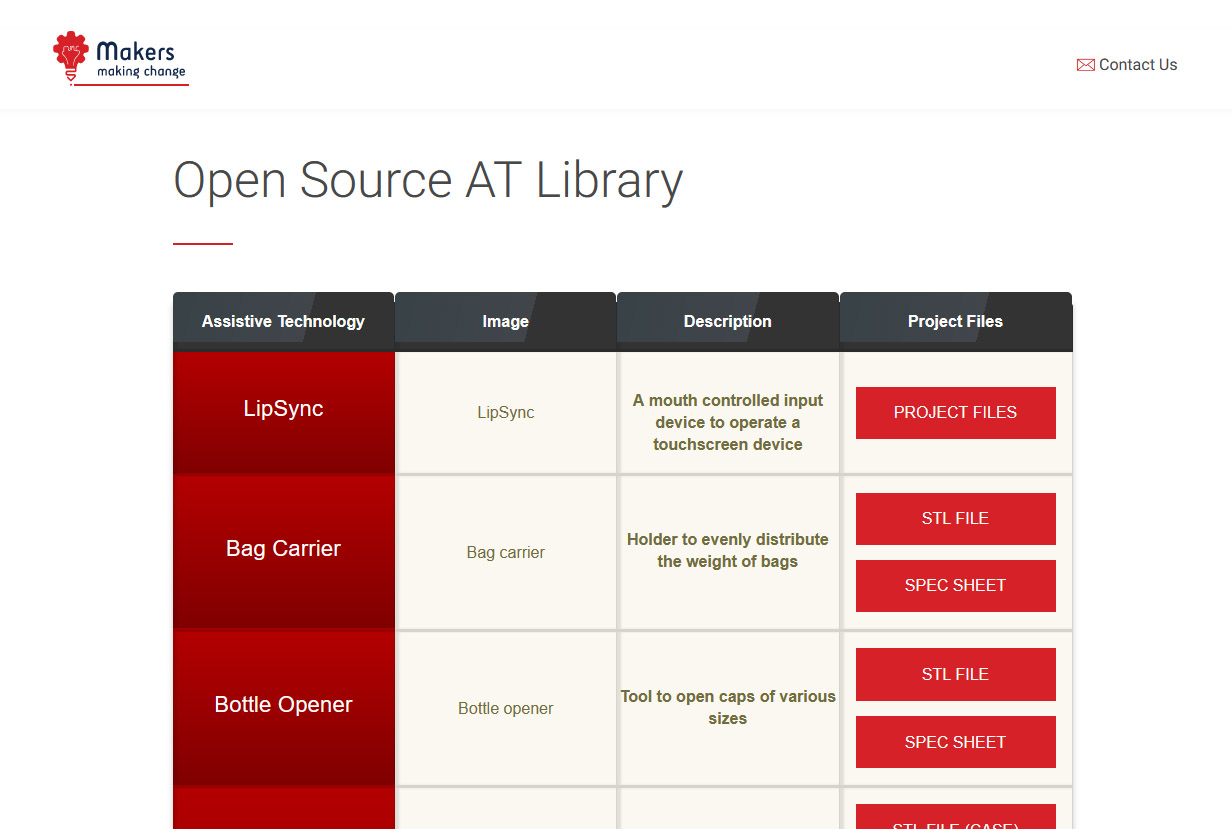
In September of 2017, the Makers Making Change Assistive Device Library launched with an initial roster of 12 devices — the LipSync, Bag Carrier, Bottle Opener, Clicking Measuring Wheel, Curved and Flat Dyslexia Bars, Horizontal and Vertical Finger Pencil Holders, Key Turner, Nail Clipper, Palm Pen Holder, and Pen Ball.
At that point, the website was basic, you could download the print files to build one yourself and a spec sheet for each, but not much else.
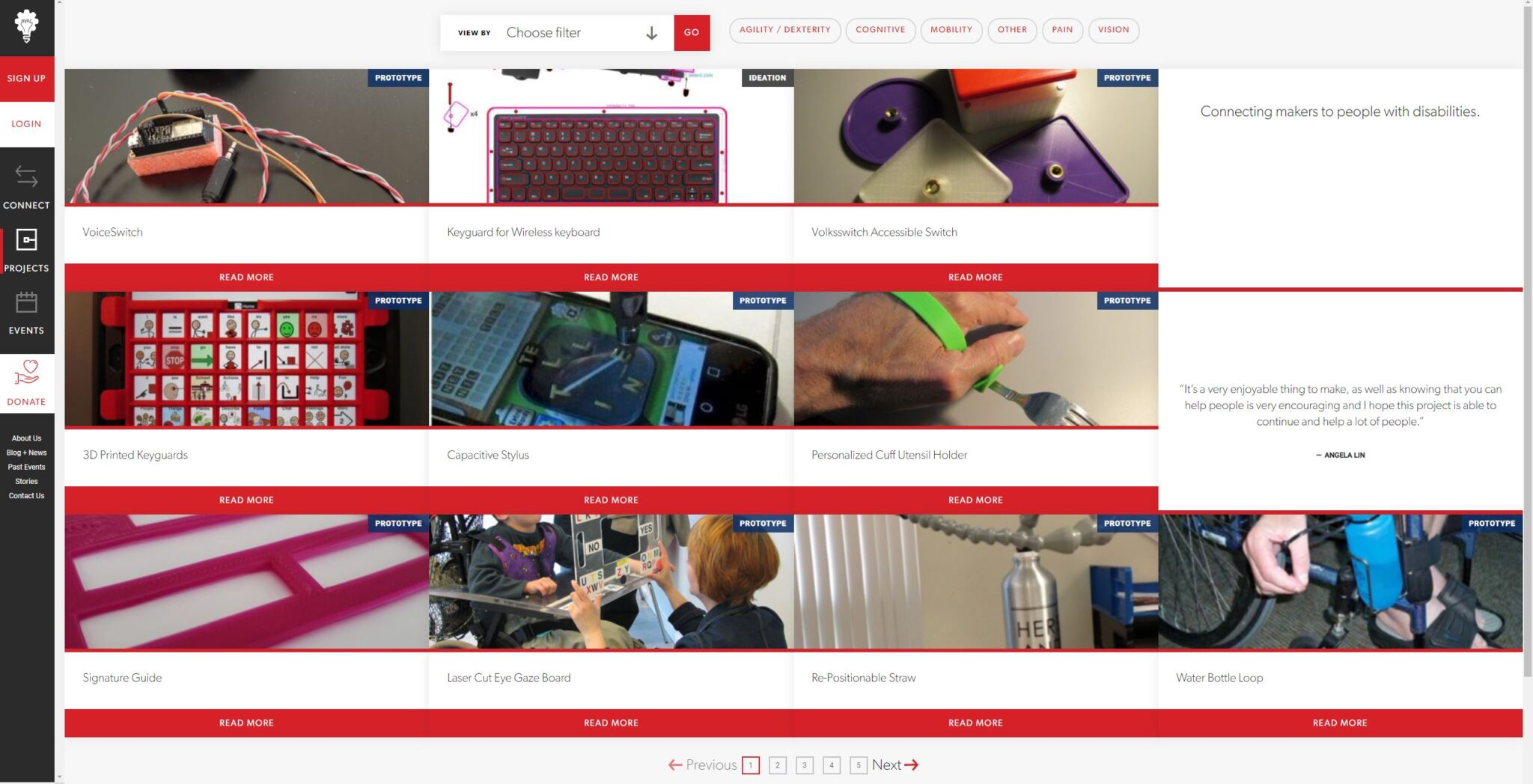
A more complete platform — with the ability to request devices and actually connect with makers, as well as a much larger scope of assistive technology designs — launched at the end of May 2018. (Pictured above).
While we had been building a community of makers through our build events and community outreach, this marks the true beginning of the MMC community.
Ten Years On
Over the last 10 years, Makers Making Change has grown a lot.
Our Assistive Device Library has seen a few different iterations, growing to over 200 devices, with detailed instructions and documentation for each device, curated by our research and development team with significant contributions by our community of makers.
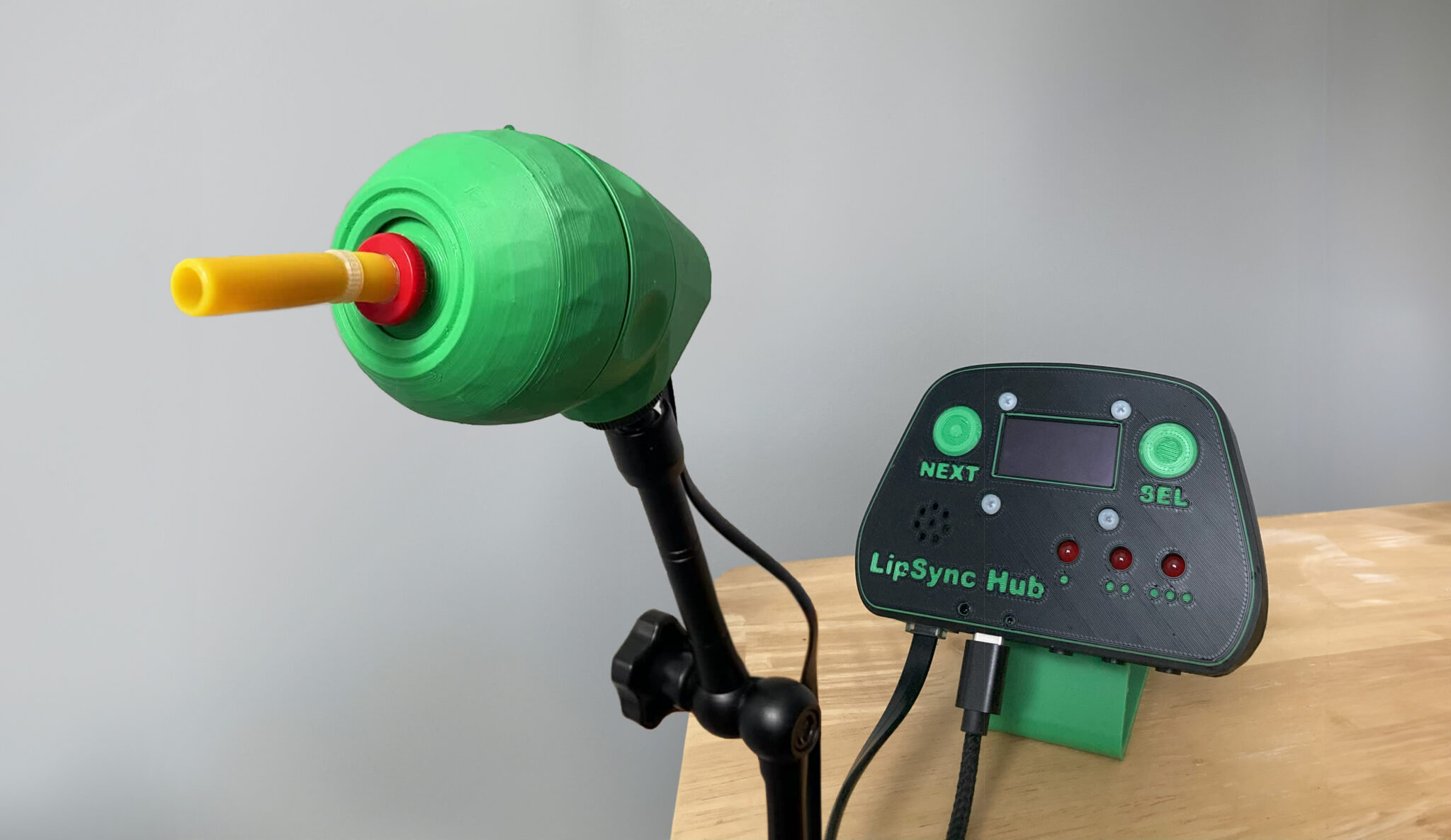
The LipSync, the device that started it all, has also undergone several iterations, improving usability and makeability. For our most recent iteration of the LipSync, published in 2024, it was completely re-designed from the ground up to improve longstanding issues like cursor drift.
We’ve added volunteer chapters across the Canada and US, and have focused on engaging youth volunteers in Canada through our STEM With Purpose (new window) and Clubs That Care programs, inspiring the scientists and the leaders of tomorrow while providing assistive technology to people who need it.
We’ve become leaders in Adaptive Gaming (new window), ensuring that gaming — one of the fastest growing forms of entertainment, and a great avenue for social connection — is accessible to people with disabilities.
Our annual Hacking for the Holidays (new window) campaign ensures that kids with disabilities get access to the adapted toys that allow them to play.
With over 30,000 devices delivered to persons with disabilities in at least 102 countries, we can’t wait to see what comes next.
To celebrate 10 years, and to ensure the success of Makers Making Change in the years to come, we’re launching a fundraising campaign over the summer. Help us make the next 10 years even better, and consider donating (new window) today — for every dollar donated, your donation will be matched for double the impact.
This post originally appeared on the Makers Making Change (new window) website.