
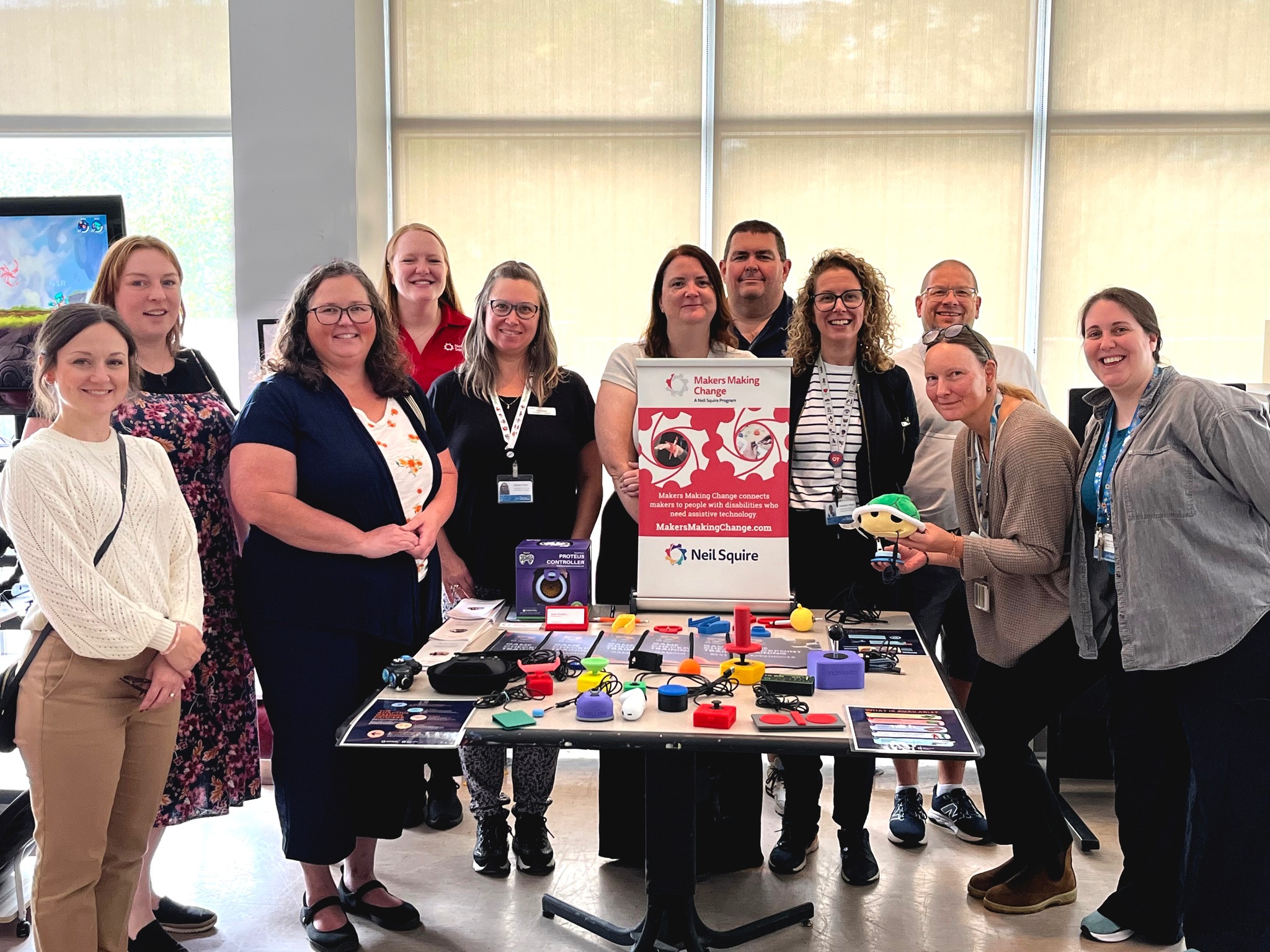
The Access to Technology Consultative Service (new window) at the Nova Scotia Rehabilitation and Arthritis Centre (new window) in Halifax helps clients who have recently had a disability, injury, or change in their health use the technology they need in their daily life. Recently, they’ve joined us as one of our 11 GAME Checkpoints (new window), allowing them to help more clients access gaming.
“[This] has really bulked up what we’re able to provide to people in terms of adaptive gaming,” says occupational therapist Liz Peters.
“We’ve dabbled in [adaptive gaming],” says rehabilitation engineer Kim Parker. “But it wasn’t one of our targeted areas.”
Now, the Nova Scotia Rehabilitation and Arthritis Centre is fully equipped to serve gamers with disabilities. While they previously had a limited number of devices including an Xbox and Xbox Adaptive Controller, our adaptive gaming team helped them build an inclusive set-up that has something for all needs and preferences.
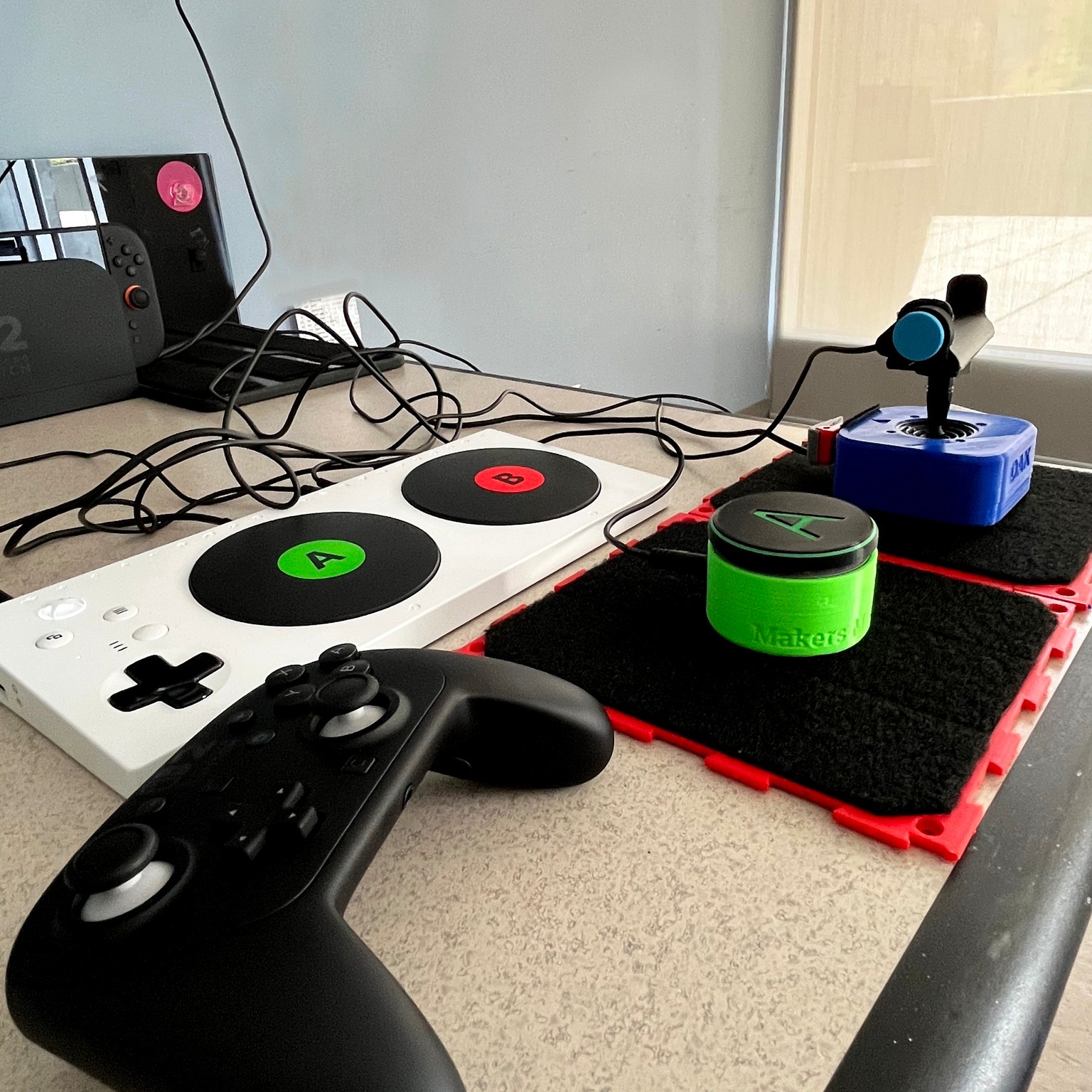
With funding from the QEII Foundation (new window) and guidance from our team, they were able to purchase a variety of consoles, including the PS5 and the Nintendo Switch 2, as well as adaptive controllers and switches to use with them. They were also able to vastly increase their library of games spanning across a variety of genres.
Many of their clients are looking to play the games they did before their injury or illness — if they own a Nintendo Switch, for example, they want to be able to play on their Switch at home, and if they enjoy first-person shooter games, they want to be able to play those, not just any random kind of game.
“We’ve been able to provide something that’s closer to what they played before in terms of games and consoles, and this improves their gaming experience and ultimately leads to a more successful return to gaming,” Liz explains.
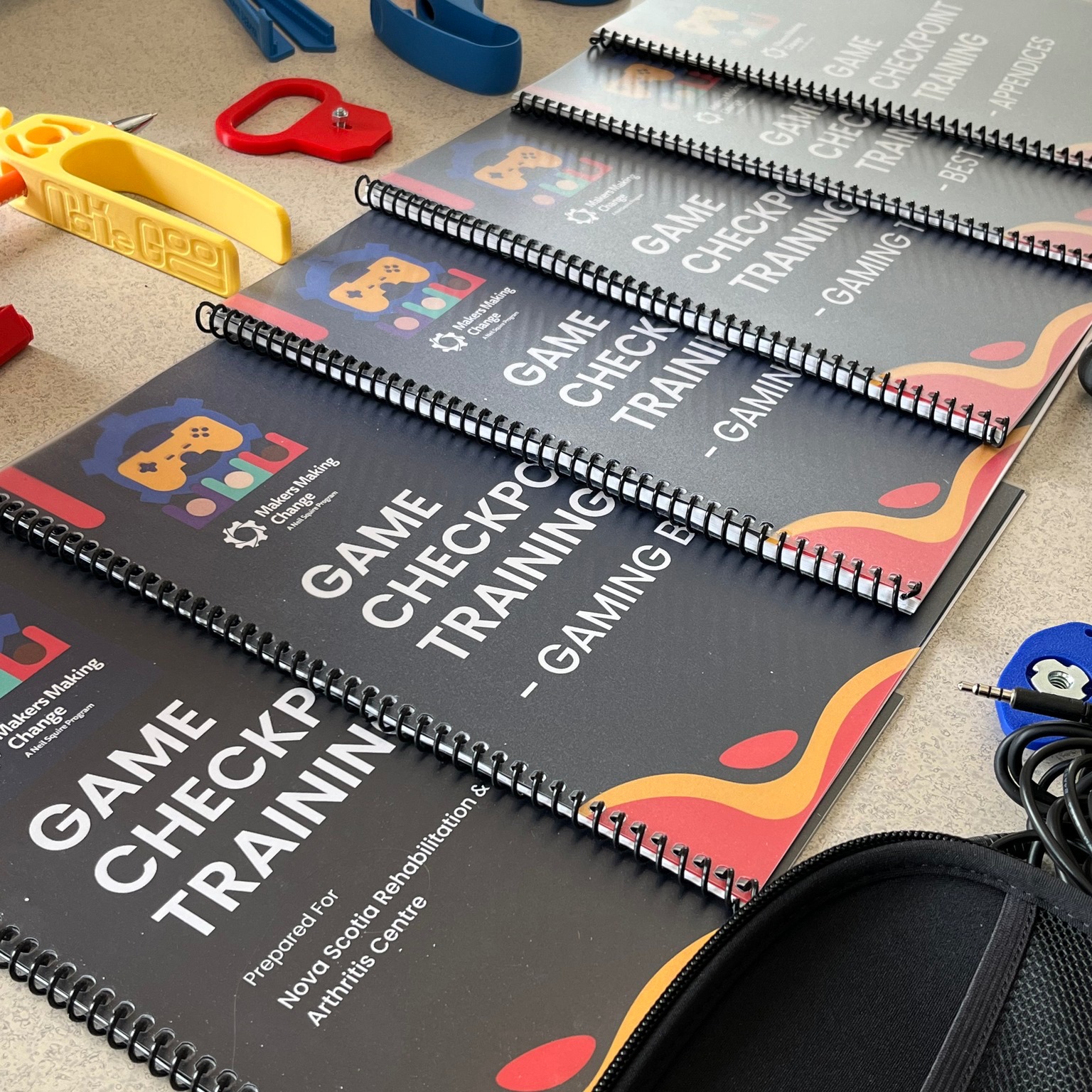
We also provided their team with intensive hands-on training sessions, which allowed them to practice different scenarios while learning about different aspects of adaptive gaming.
“Technology can sometimes be intimidating for clinicians. If someone isn’t a gamer, it can seem like a lot, and I think it was presented in a way that felt like setting up adaptive gaming doesn’t have to be overwhelming,” Kim shares.
They particularly appreciated the GAME Checkpoint resources, including reference guides that they can refer to when working with clients, helping to find equipment and games that might work well for their needs.
“One of the biggest helps is being able to have the training booklet for genres, so if someone comes in and wants to do a first-person shooting game, then I can go in and look to see what sort of options they recommend,” Kim explains.
“That really helps, because, before this, honestly it takes a lot of time and effort to get yourself up to speed so that you can actually help the client. We have lots of different individuals that we’re working with on access issues that aren’t necessarily related to gaming, so we are stretched across a bunch of different things. So, to be able to have that group of manuals as a resource really helps us get up to speed much faster.”
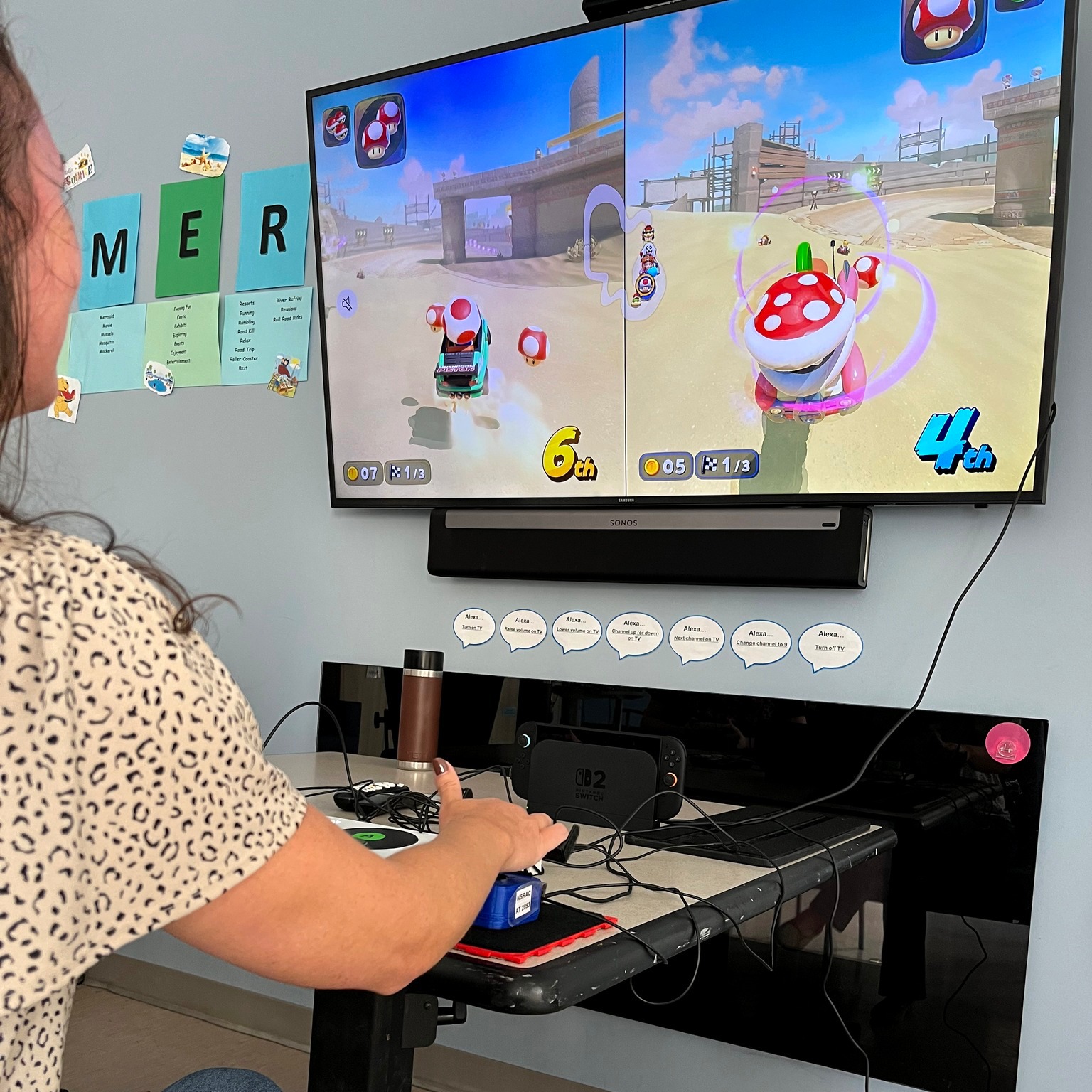
The Access to Technology team sees a lot of benefits for their clients, noting that adaptive gaming has brought joy to some of their patients who are having a hard time.
“In the inpatient rehab setting, there are so many focuses, so many skills that people are learning in anticipation of discharge that I feel like adaptive gaming is kind of an avenue that allows people to just to do something for fun,” Liz says. “Something that’s just a leisure activity and then one of the benefits of that is just the social connection that comes from that. That feeling of returning to something that they had done before is important.”
“I feel like it levels the playing field a bit. It’s a neat activity that is adaptive, but you don’t necessarily always see that it’s being adaptive,” says Kim. “I like that you could have a friend anywhere in the world and you guys are playing video games and they don’t know that you’re using an Xbox Adaptive Controller — you’re just hanging out playing a game together.”
After the team finished their GAME Checkpoint training, they hosted an open house at the Nova Scotia Rehabilitation and Arthritis Centre, with staff, inpatients, and funders in attendance. It was a great opportunity to raise awareness of the program inside the Centre.
Just recently, the new GAME Checkpoint held their first gaming night, with clients getting the opportunity to have fun and compete against each other in Mario Kart.
This post originally appeared on the Makers Making Change (new window) website.