
LipSync Update: Faces of the Access Makeathon and Access Challenges
Meet the faces of Access Makeathon – the persons with disabilities, whom teams will form around to directly address their needs.

We use technology, knowledge and passion to empower Canadians with disabilities.
Skip to Navigation Meet the faces of Access Makeathon – the persons with disabilities, whom teams will form around to directly address their needs.

Although it is not a narrative that many are familiar with, assistive technology was directly responsible for the birth of some incredible pieces of mainstream technology.

Inventor, Creators, Hackers, Tinkers and Change Makers – Join us for an exciting 48 hr Access Makeathon in Vancouver on January 27 – 29, 2017. Come build an open source assistive technology that directly address the needs of people with disability.

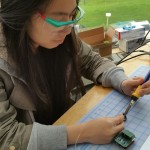
For the last days of 2016, the LipSync team is working hard to “freeze” the design ahead of the Access Makeathon on January 27th.
There’s one thing, though, that we’re still trying to nail down — the joystick.
In partnership with Rick Hansen Foundation, SFU’s School of Interactive Arts and Technology, TechSoup NetSquared, Tom Global, UBC Women in Engineering, and UBC Young Women in Engineering and Science, we are organizing a 48 hour event called the Access Makeathon from January 27th to 29th, 2017.