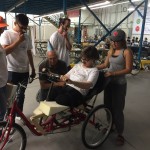
Retired Professor Tips Hat To Assistive Technology Program
In the decades it has taken for Paul Horgen’s sight to decline, he’s had a successful 35-year teaching career at the University of Toronto, travelled abroad and authored a book.
We use technology, knowledge and passion to empower Canadians with disabilities.
Skip to NavigationIn the decades it has taken for Paul Horgen’s sight to decline, he’s had a successful 35-year teaching career at the University of Toronto, travelled abroad and authored a book.
We are excited to tell you about the first “homebuilt” LipSync – the first one made outside of our initiatives.
We will be at the largest Maker Faire in the world, the Maker Faire Bay Area, from May 19-21, 2017 to present about Making Access for People with Disabilities.
While the ubiquitous smartphone has become an invaluable tool around the globe, many people with quadriplegia or any other disability that limits hand function believe the technology has passed them by.
We’re in Philadelphia this week at the 2017 AOTA (American Occupational Therapists Association) Annual Conference. In front of over 13,000 occupational therapists, we are promoting the LipSync and “making” to create access solutions for people with disabilities.